
Missing teeth can affect more than just your smile—they impact chewing ability, speech, and overall oral health. Fortunately, modern dentistry offers two popular solutions for replacing missing teeth: dental implants and dental bridges. But which one is right for you? In this blog, we’ll compare dental implants vs. bridges, discussing their benefits, drawbacks, and which option best suits your needs.
What Are Dental Implants?
Dental implants are permanent, artificial tooth roots made of titanium, surgically placed into the jawbone. They provide a strong foundation for a crown, mimicking the function and appearance of a natural tooth.
Benefits of Dental Implants:
- Long-Lasting & Durable – Can last a lifetime with proper care.
- Prevents Bone Loss – Stimulates the jawbone, preventing deterioration.
- Natural Look & Feel – Functions just like a real tooth.
- No Damage to Adjacent Teeth – Unlike bridges, no need to modify surrounding teeth.
- Improved Chewing & Speech – Restores full bite strength.
"Your smile deserves the best—explore the right tooth replacement option for long-term oral health!"
Drawbacks of Dental Implants:
- Longer Healing Process – Can take 3–6 months for full integration with the jawbone.
- Higher Cost – More expensive than bridges but cost-effective in the long run.
- Requires Surgery – Some patients may not be suitable due to bone loss or health conditions.
What Are Dental Bridges?
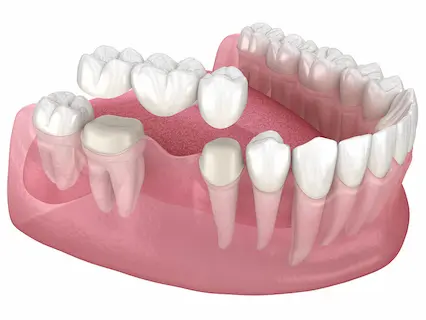
A dental bridge is a fixed prosthetic device that replaces missing teeth by anchoring an artificial tooth between adjacent natural teeth or dental crowns.
Benefits of Dental Bridges:
- Faster Procedure – Typically completed within 2-3 visits
- More Affordable – Lower upfront cost compared to implants.
- No Surgery Required – Ideal for patients who prefer a non-invasive solution.
- Effective for Multiple Missing Teeth – Works well for gap replacement in a row.
Drawbacks of Dental Bridges:
- Shorter Lifespan – Lasts 10–15 years compared to implants which can last a lifetime.
- May Damage Adjacent Teeth – Requires reshaping of healthy teeth for support.
- Doesn’t Prevent Bone Loss – No stimulation for the jawbone, leading to gradual bone shrinkage.
- Higher Risk of Decay – Food particles may get trapped under the bridge, increasing cavity risks.
Both dental implants and bridges offer effective solutions for missing teeth, but the right choice depends on your oral health, budget, and long-term goals. If you want a lifelong, natural-feeling tooth replacement, dental implants are the gold standard. However, if you’re looking for a faster and more affordable option, a dental bridge may be the best choice.